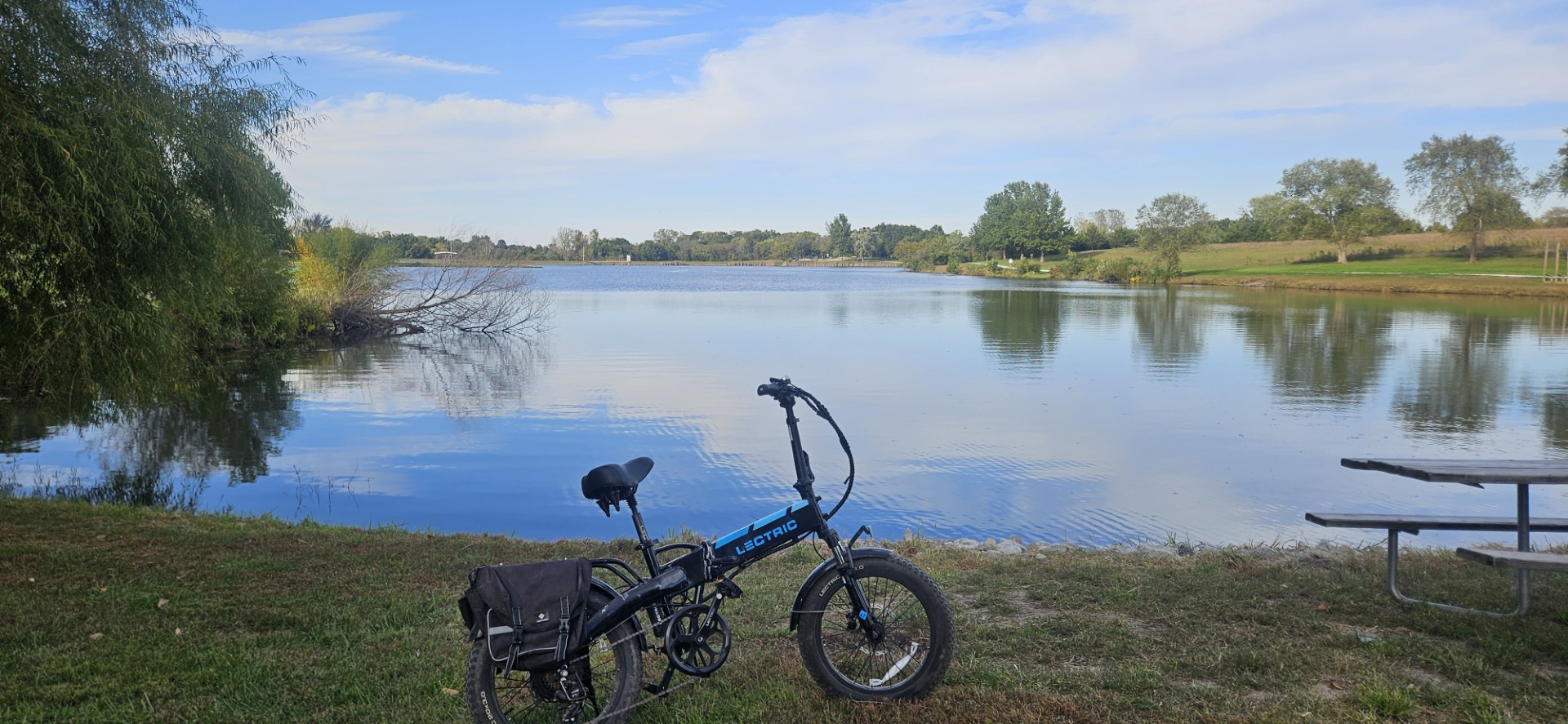
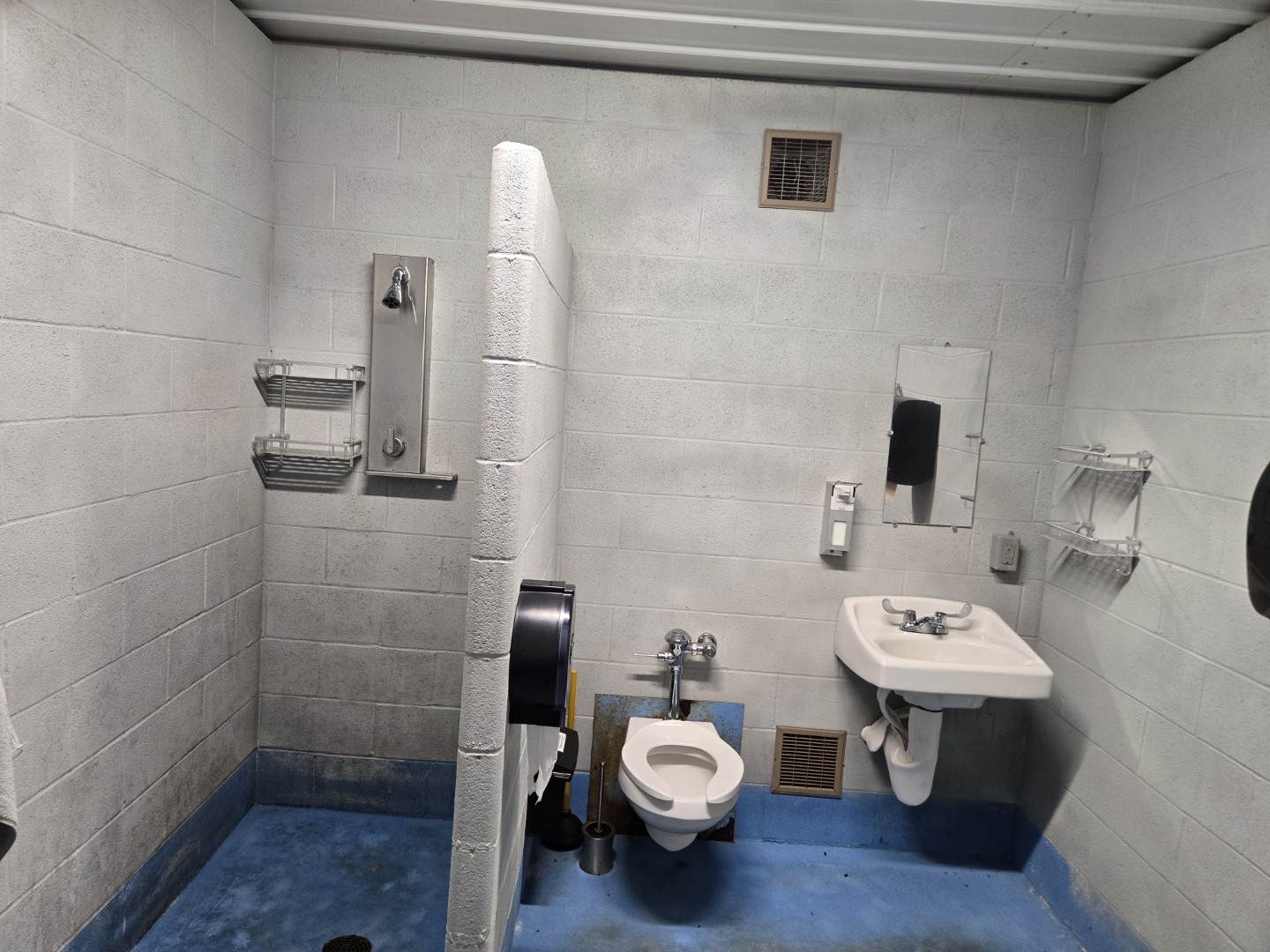
Our readers may wonder about our obsession with campsite bathhouses. It is simply because this is one of the major differentiators between an excellent campground such as this one at Lakeview, and a crummy one as several of the previous one (including the one with no mirrors.)
Why not use the bathroom in the camper and skip the campsite bathhouse? We like to avoid doing number 2 in our camper – due to the smell and such, and the RV shower stall is both very cramped and the hot water can run out. The RV sink is small and it is more difficult to brush your teeth or shave. Roomier bathhouses make all this much easier. Plus, we use a lot less water in the camper so we don’t have to dump as often – we generally do this every 3-5 days rather than hooking up to the sewer each time we stop.
What do we look for in an OWGRV-rated “A” bathhouse?
- Clean of course
- hooks to hang your robe/clothes and a second hook for your towel
- A bench to sit on while dressing
- A soap dish or shelf in the shower
- A place near the sink to put your shower bucket
- Toilet paper on a holder (last site had just a roll on the bench)
- Both hot and cold water, sink.
- Hot water in the shower with an intuitive way to control it
- Good water pressure and spray pattern in the shower
- Some way to dry your hands – paper towels best, but air dryer is fine
- Rubber mats in the shower and dressing area of the shower – otherwise dirt and grit gets everywhere and sticks to your wet feet
- Enough full bathrooms with shower, sink and toilet in one room, instead of a community bathroom
- An HVAC system to keep the temp reasonable
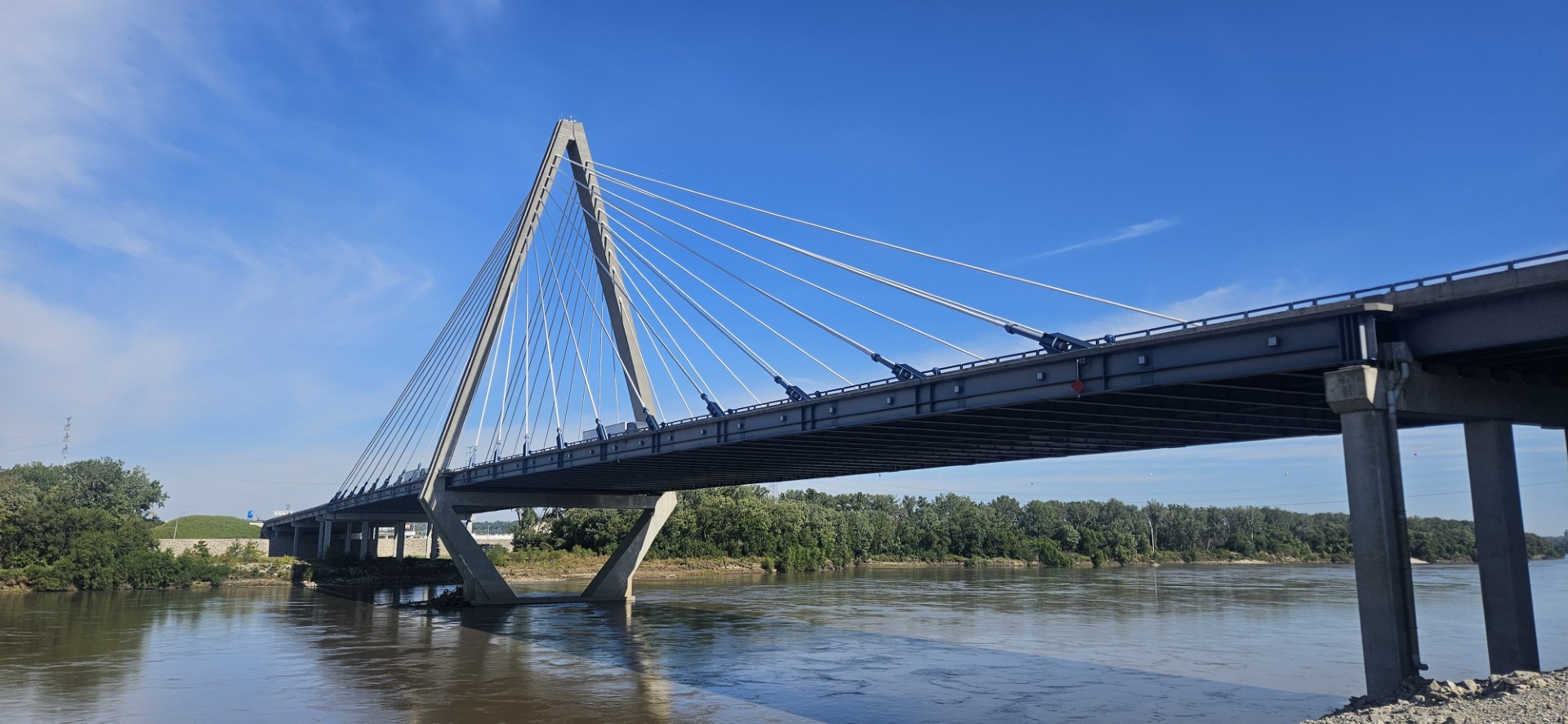
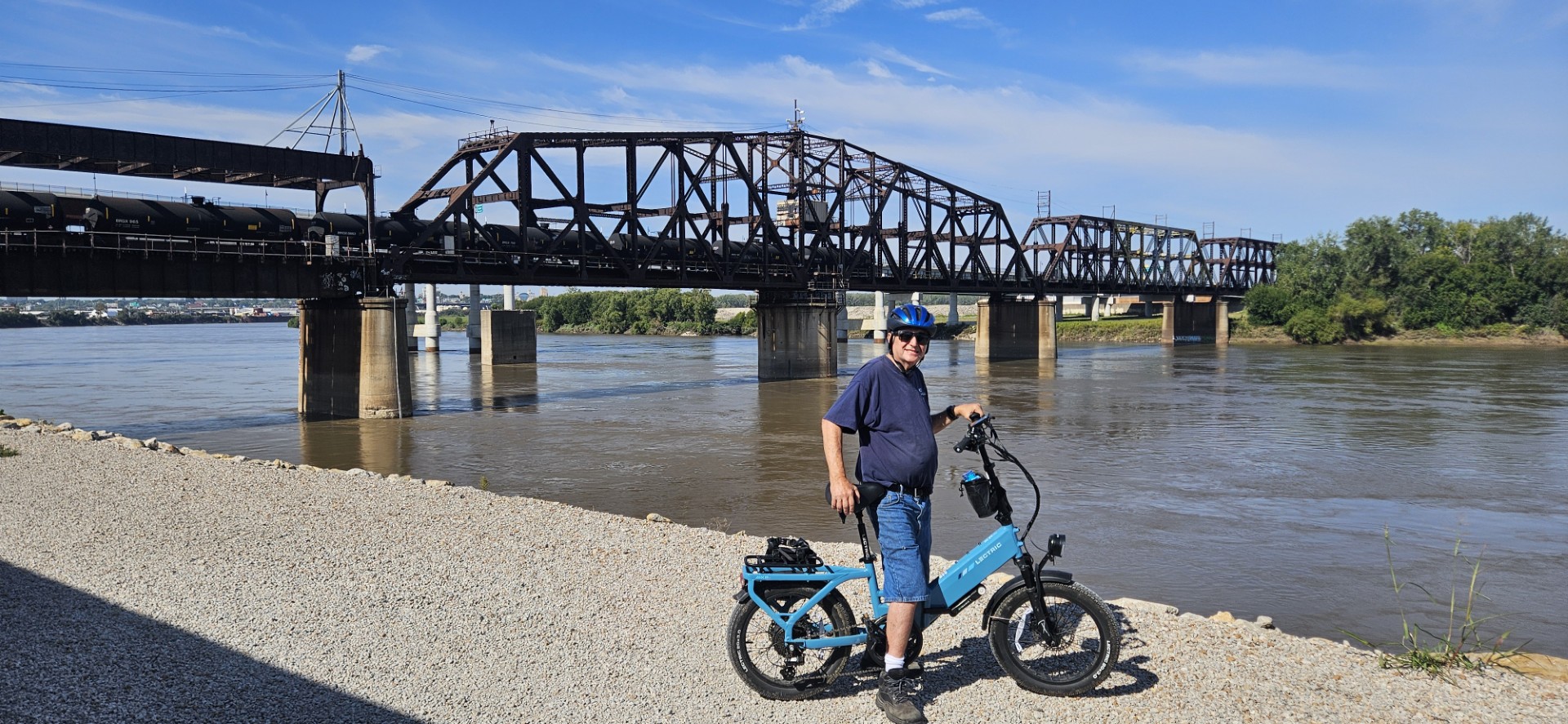
We stayed in Lawson, which is a small town outside of Kansas City with not much to do, so we backtracked to Kansas City to seek adventure. Since going for bike rides along downtown rivers was kinda our thing, we thought we would do that. The Riverfront Heritage Trail along the Missouri River seemed to fit the bill nicely. And it was near the Acadia Steamboat Museum which we planned on checking out. The day was supposed to get hot, but in the morning it was a bit chilly so we thought we would start with the museum then ride. But – it being Sunday – we discovered the museum did not open until noon so we parked illegally in a paid spot near the river and did the ride. Who charges for parking on Sunday?
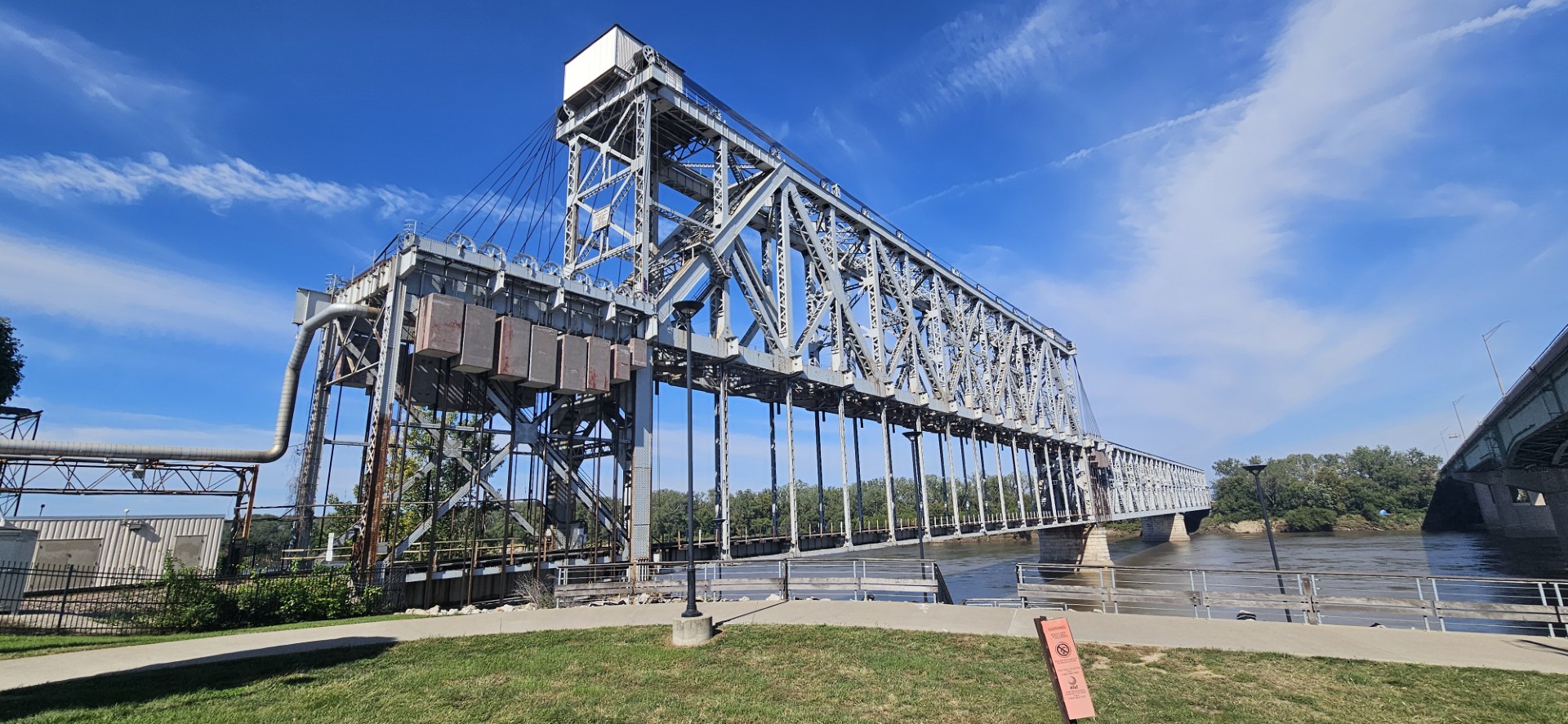
Since it was such a nice day, we had to share the path with joggers and dog walkers and such, but everyone was very nice. As with Memphis, we encountered usual rail and road bridges across the Missouri, but none were designed for bikers.
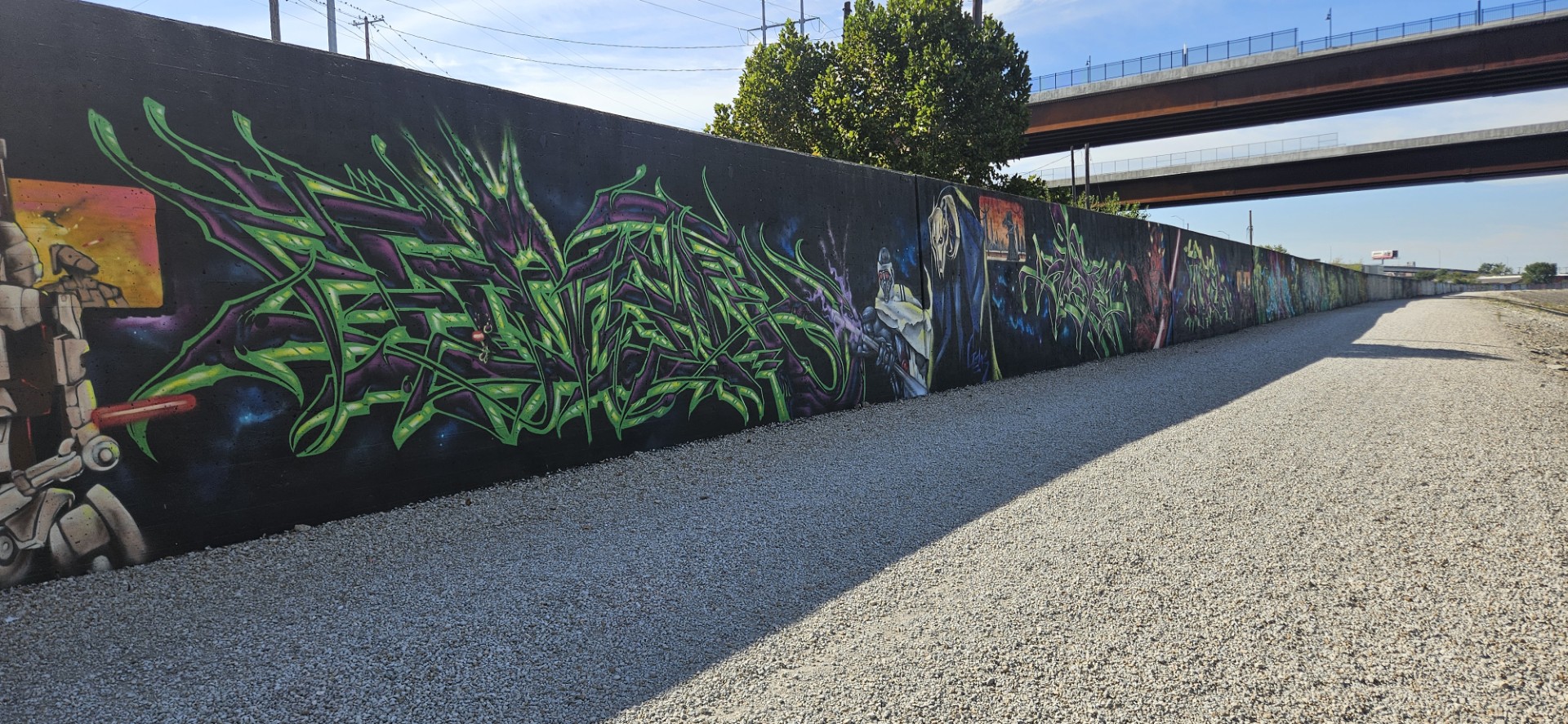
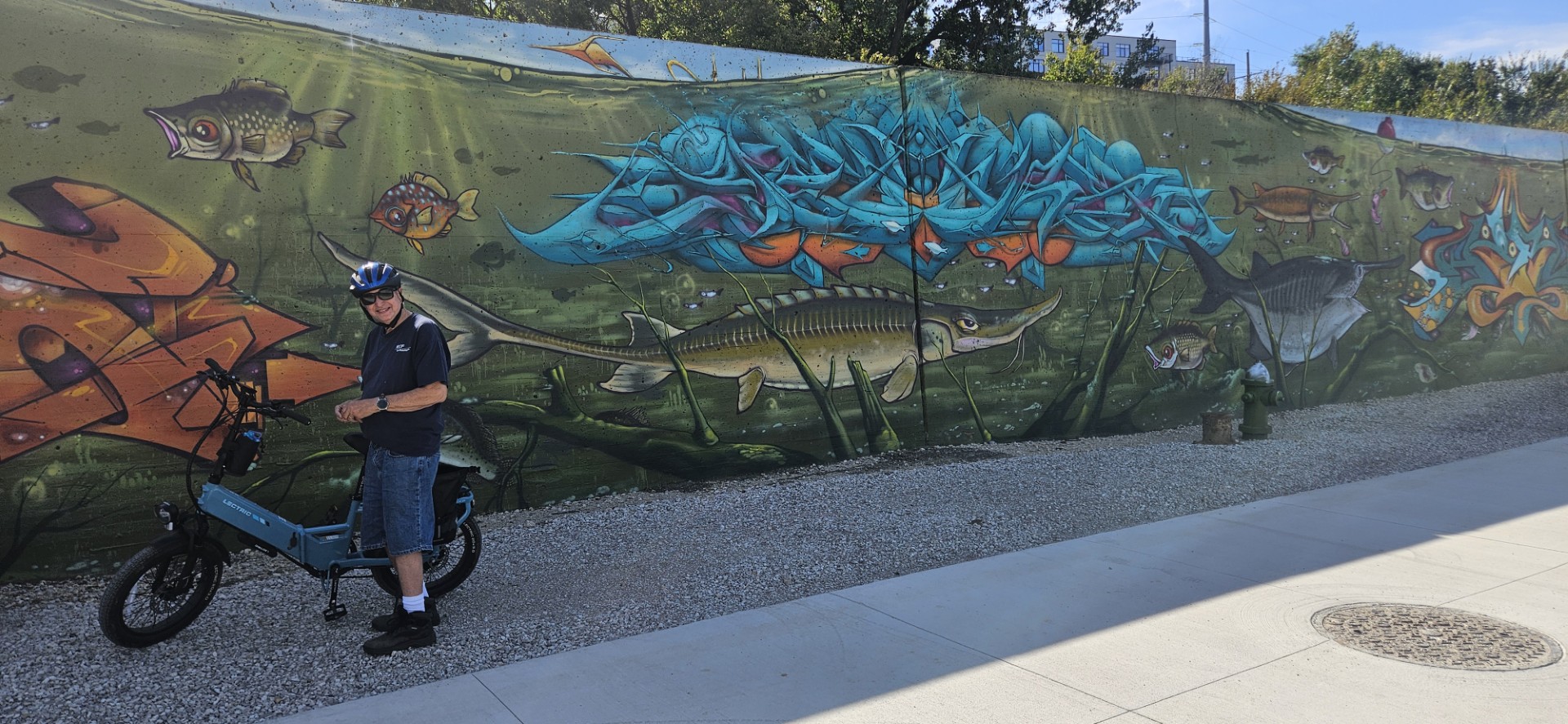
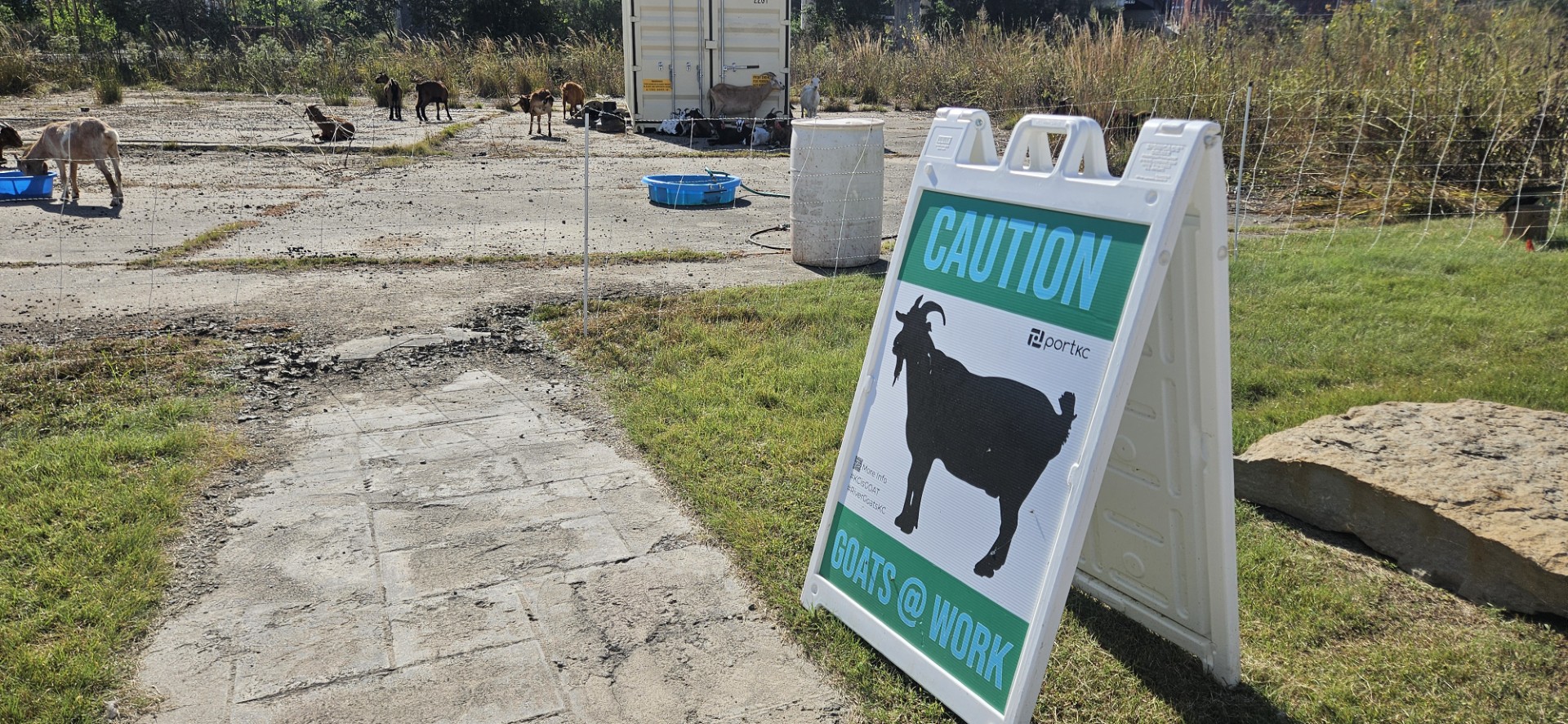
Then there were several things we had not seen before. They was a concrete wall about 10′ high and stretching more than a mile long covered with murals coordinated by the MO River Mural group. And then there were the goats. AI is not coming for your job – the goats are. They have a roving heard of goats working to eat the grass and weeds along the trail.
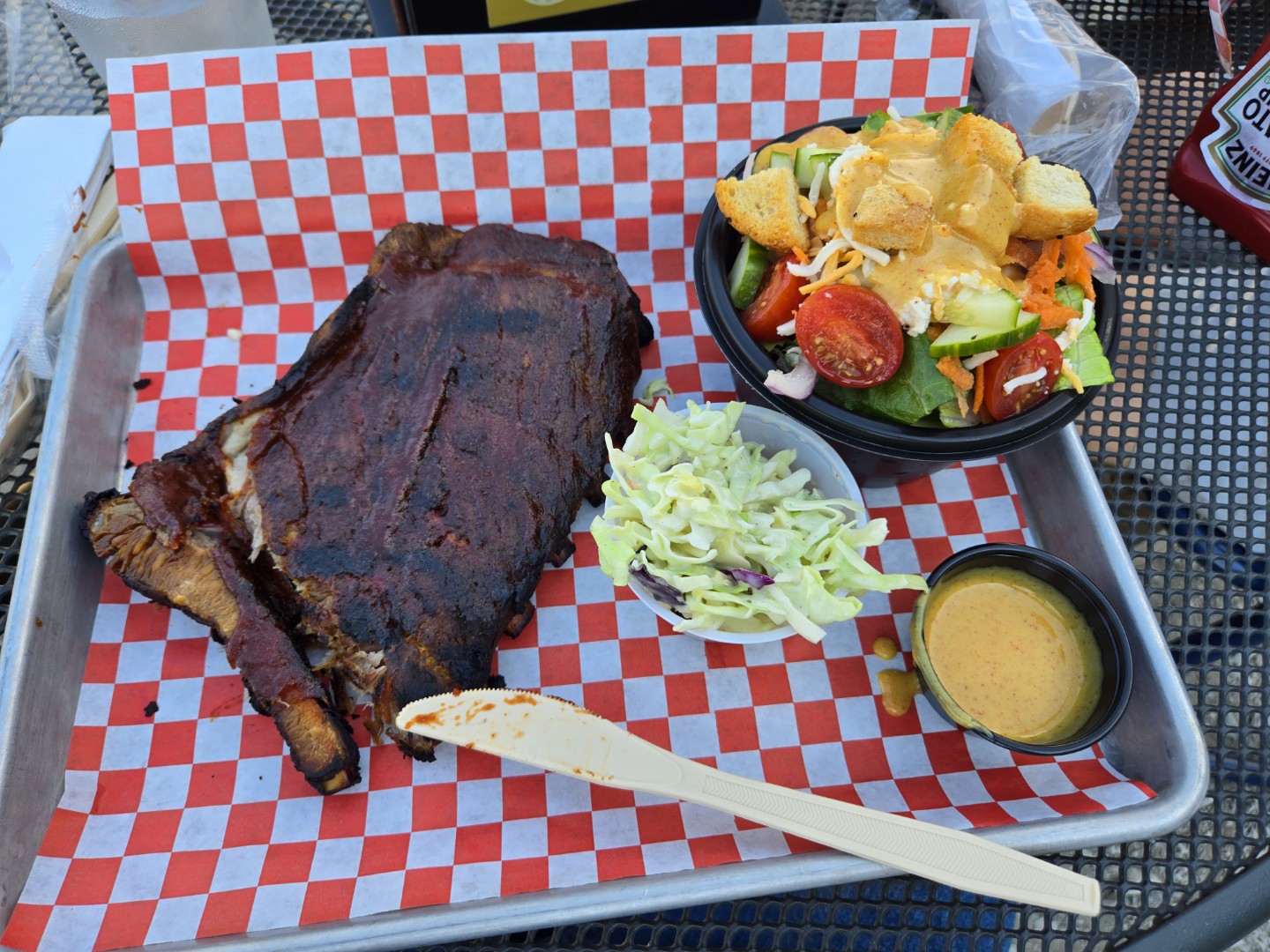
The ride was nice and we returned to the Jeep around noon – time for lunch. There was a beer pub right there, so we watched the last minute or so of the Eagles playing the Jaguars in London – a game where the Eagles snatched defeat from the Jaws of Victory in a very disappointing strategy error. Then we had a kind of disappointing meal – who knew you could get overly dry ribs in Kansas City? The wait staff wasn’t much better and abandoned us again – is it something about us? Then on to the museum.
The story behind the Arabia museum was fascinating – as were the artifacts that were displayed and the videos that explained the process. It was an interesting parallel to the recent discovery and recovery of 4 revolutionary war cannons by Scott’s brother Ray and his friends. In that case the movement of the French Creek unearthed some of the cannons buried to keep them from the British. In this case the Steamboat Arabia sank in 1856, but movement of the Missouri River left them buried 45 deep in a cornfield until they were unearthed in 1988.
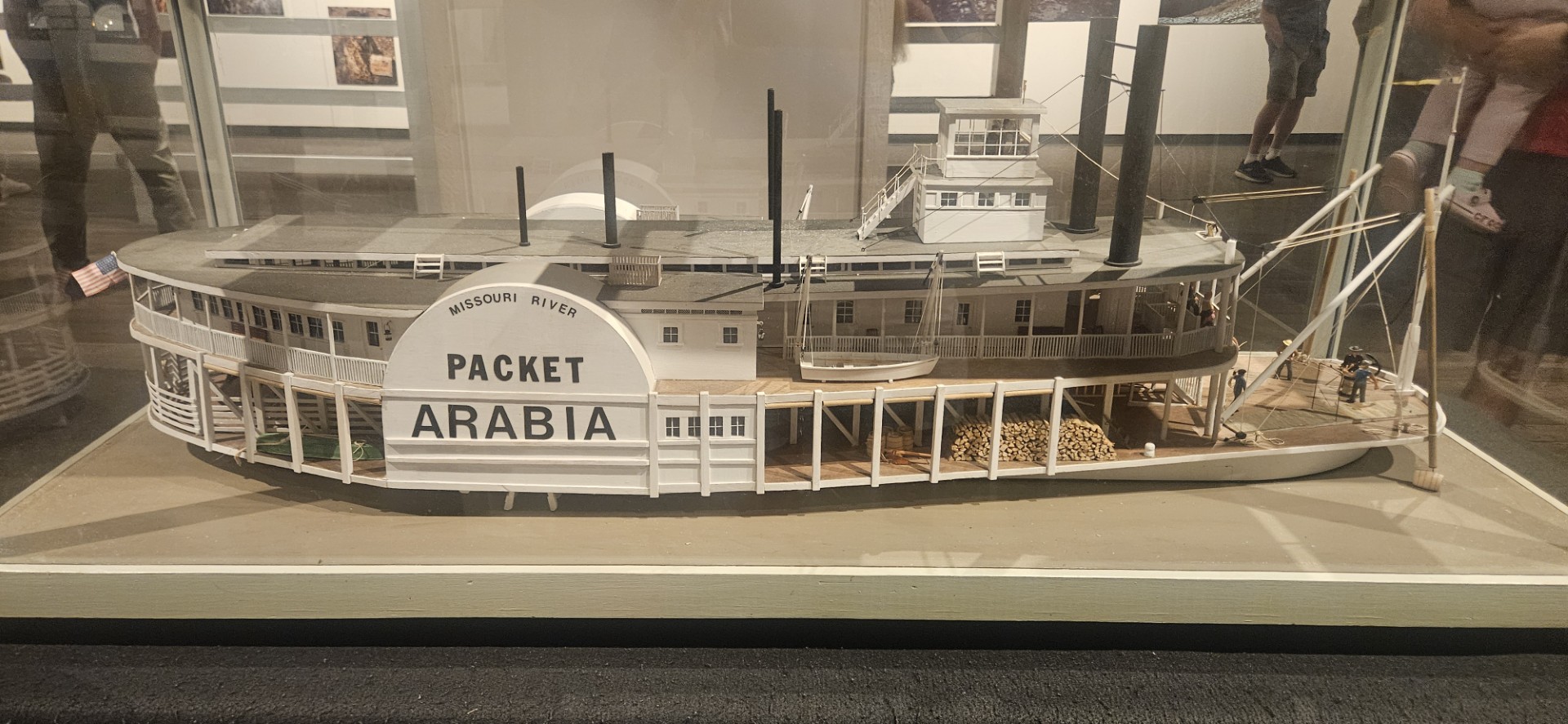
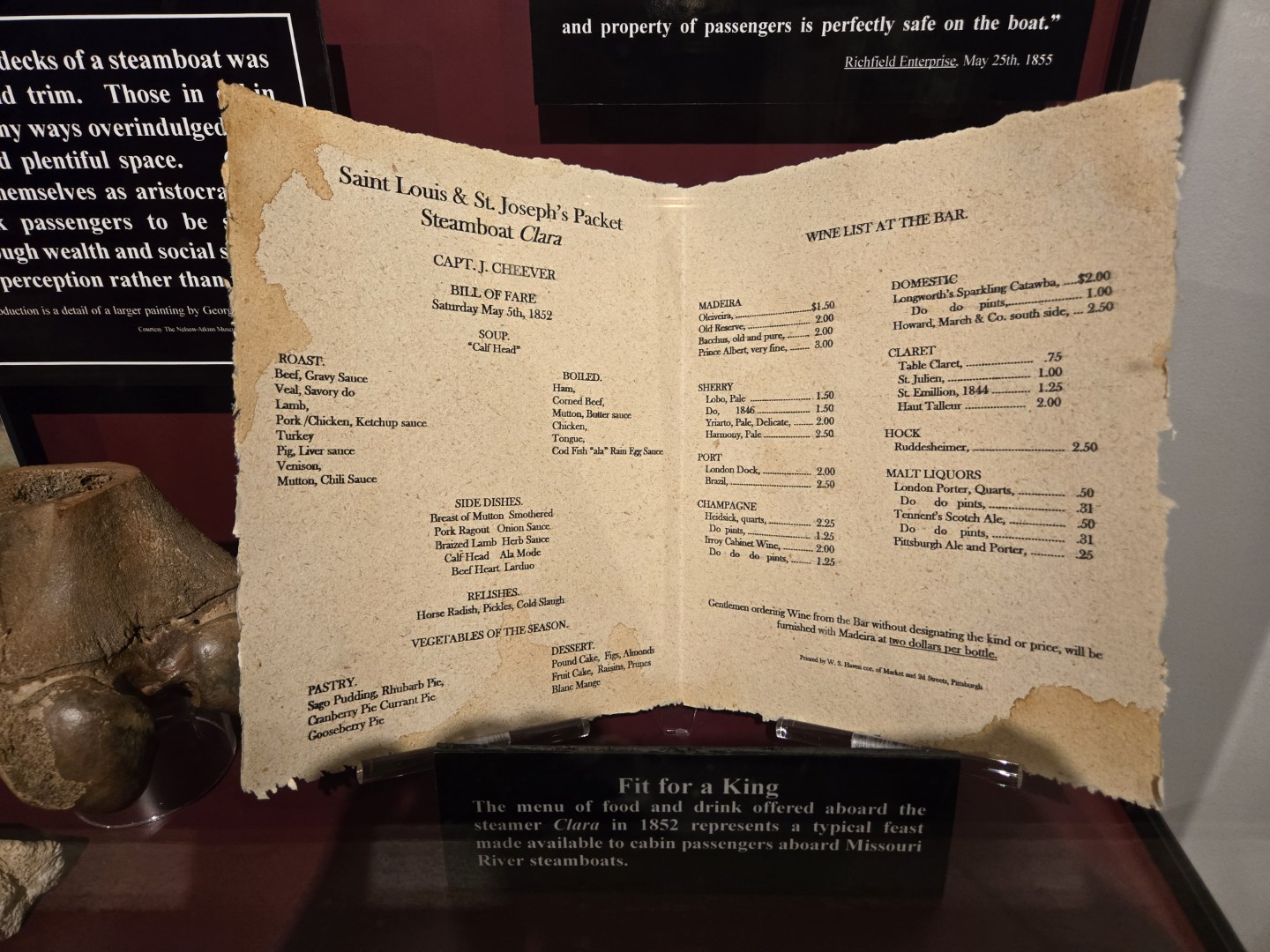
Life aboad a paddlewheeler was posh for the well-to-do, but it was described to us as more dangerous than a trip today from Kansas City to the moon
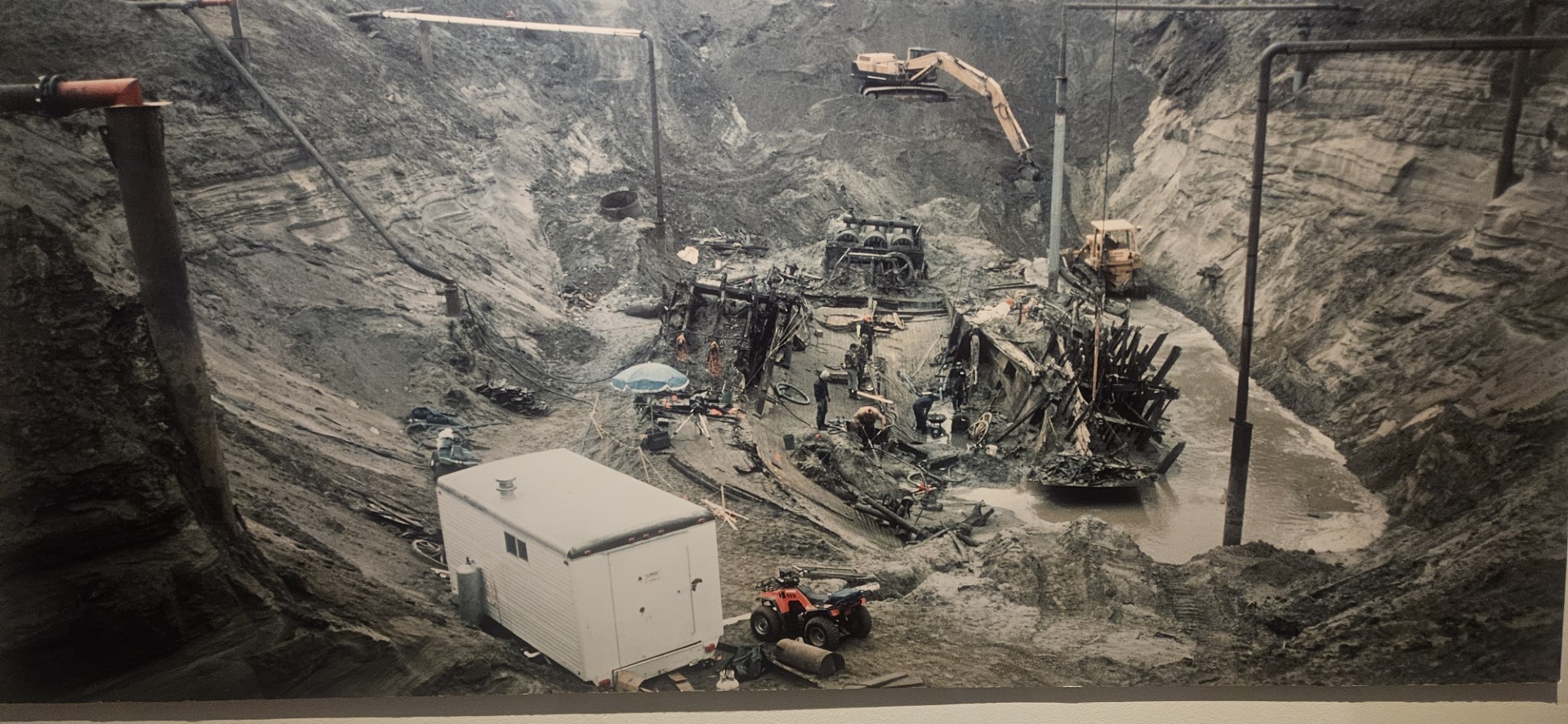
The process of finding the Steamship involved Proton Magnetometers with the searchers carrying the instruments through the cornfield. They then drilled holes in the swampy water in a grid until they hit the ship (or not.) They could tell if they hit the ship because their drilling equipment vibrated. They then drilled large wells to suck the water out of the area so they could reclaim the ship – running them constantly during the 4 months it took to reclaim most of the ship’s superstructure, engines, and cargo. All of this, apparently, without any involvement of government in any way (as far as the displays show.) The ship’s stores of alcohol (champagne and such,) and stores such as pickles were partially consumed by the searchers as they were unearthed, but the careful preservation efforts were evident and are ongoing.
It was amazing how intact the Arabia was after being 45 feet undeground for over 130 years, but even more amazing is how well the artifacts were preserved, especially the organic materials like fabrics and leather. The museum only displays about 20% of the artifacts recovered, and these are of course the best preserved. Most of the artifacts were from cargo shipments, not the passengers personal belongings.
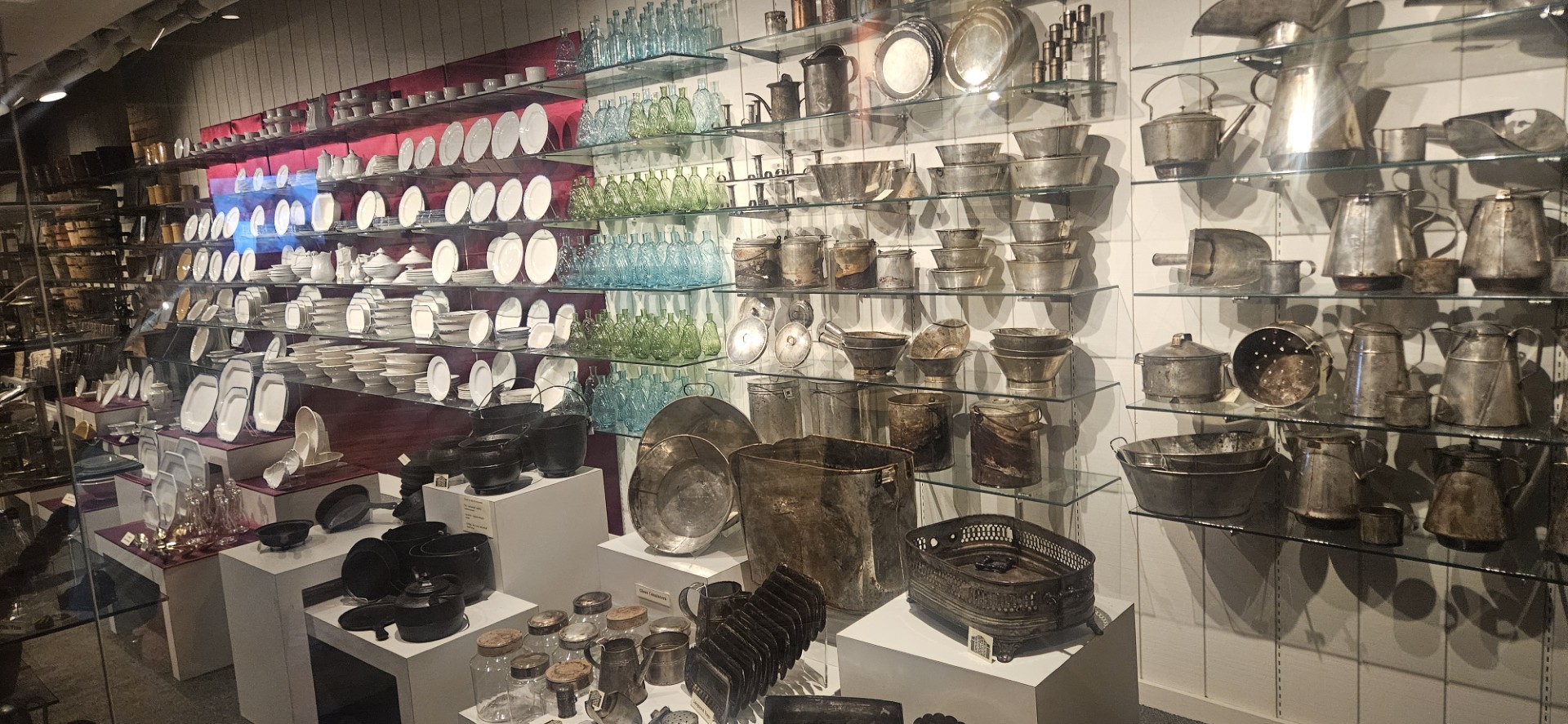
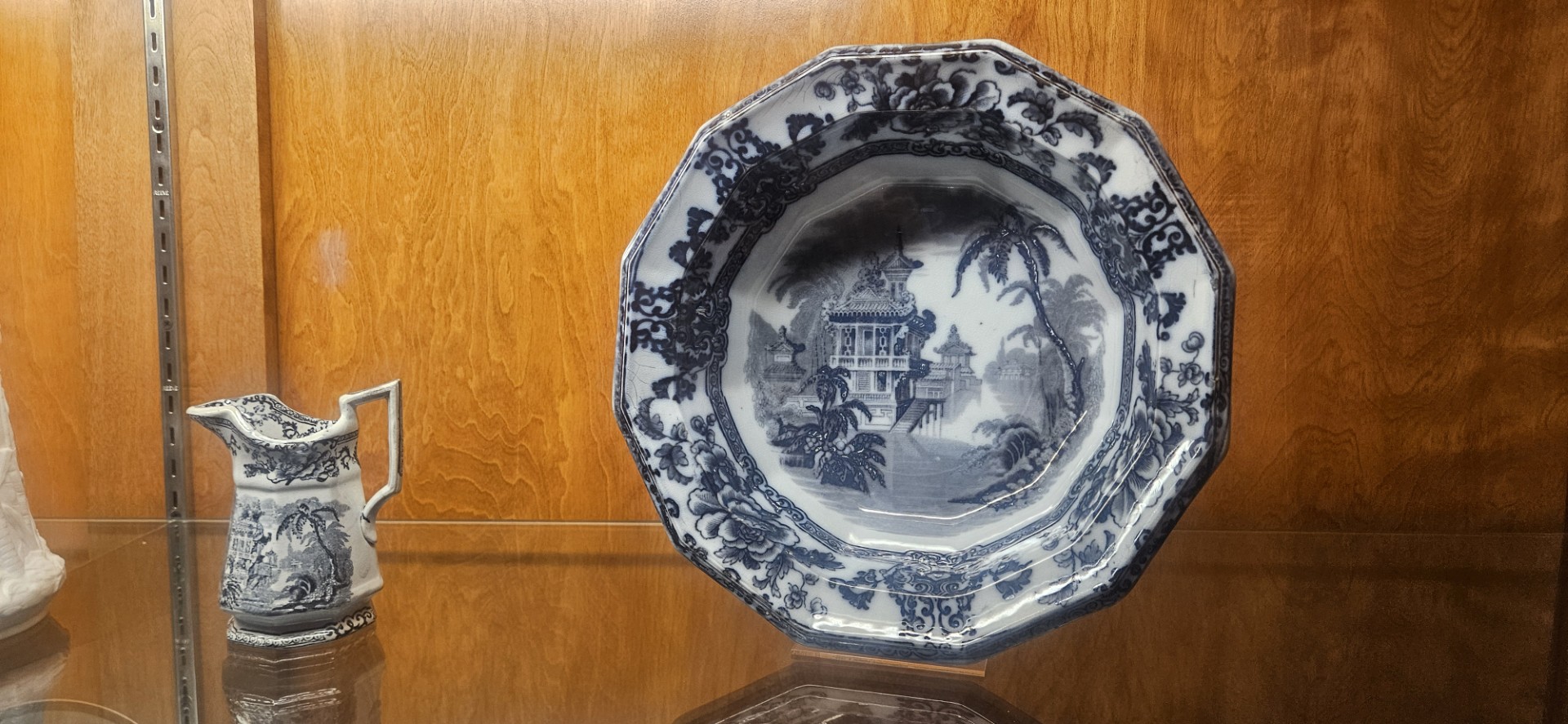
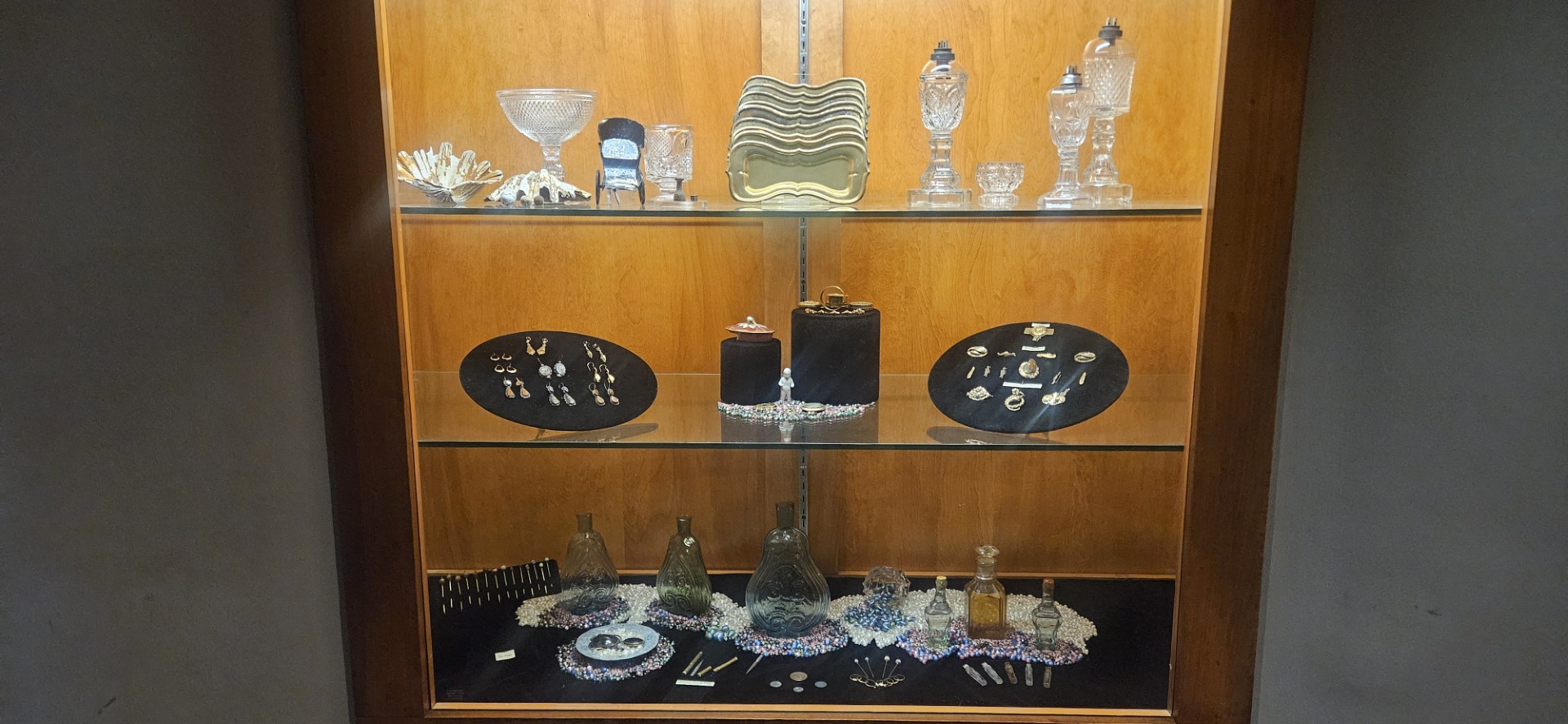
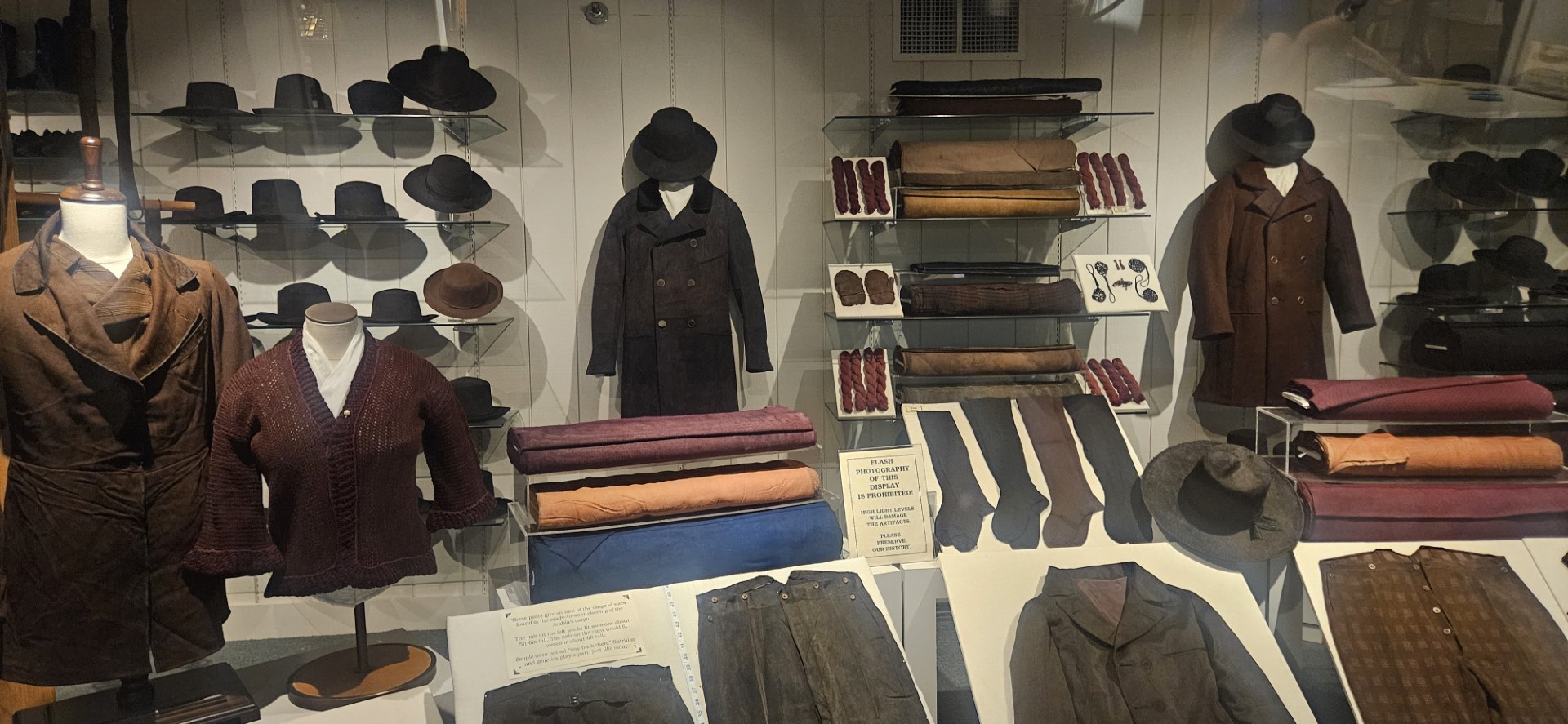
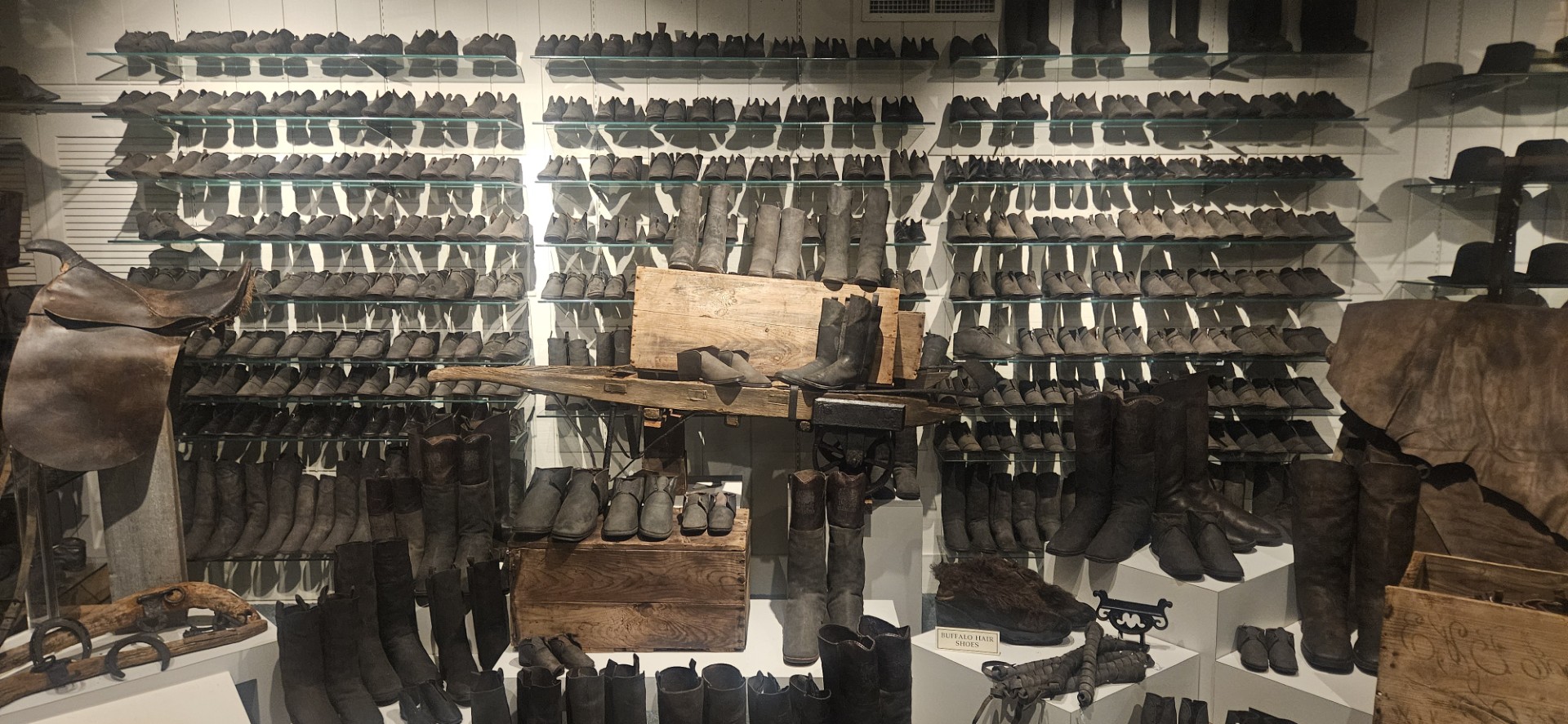
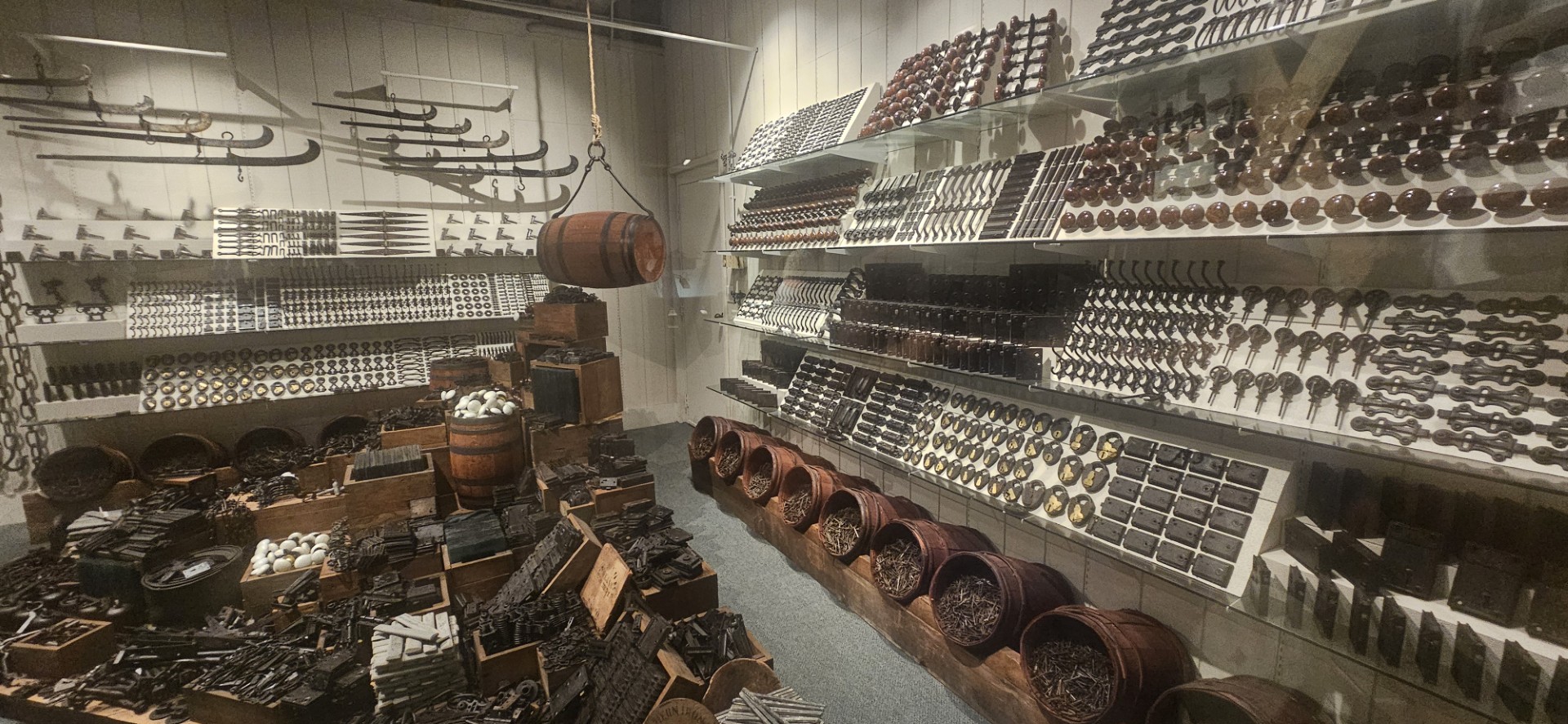
Interestingly, the museum has been in downtown Kansas City for 35 years, but the city and the owners of the museum have been unable to agree to extend, and the museum will close on November 13th with the collection going into storage. The senior rate for entrance to the museum was around $15, and well worth it. We speculated about the actual reasons for the split with the City of Kansas City.
At the incredibly busy parking lot outside the museum, Scott tried to pay for parking on his phone but grew frustrated with the endless information that was requested. It was Sunday. How could they get anyone to write tickets? They had someone, and he or she did just that. The online procedure for paying the $15 fine was easier than the procedure for paying the $5.45 parking fee.
After we took in all we could of “the largest single collection of pre-Civil War artifacts in the world” we returned to the campsite, took another ride around the lake at Lakeview, then dinner, blog, and bed.